Finding Meaning Beneath the Tinsel
Winter has a way of asking us to slow down, even when the world around us seems to speed up. The days shorten, the light softens, and nature quietly withdraws. Yet culturally, this season often arrives with noise, urgency, and a long list of things to buy, do, and organise. For many people, Christmas and the festive period can feel tangled, a mix of warmth and overwhelm, comfort and disconnection.
On our December Connect3 walks, we chose to step gently away from that noise. Walking slowly through winter landscapes, we explored the origins of familiar festive symbols, not as decorations or traditions we should follow, but as stories shaped by people paying close attention to the natural world.
What we discovered, again and again, is that many of the symbols we now associate with Christmas began as simple, human responses to winter itself.
Winter as Teacher
Long before calendars were crowded and shops filled with decorations, winter was a time of deep listening. Food was scarcer, travel was slower, and survival depended on cooperation, observation, and respect for the land. Across cultures and belief systems, people marked this time not with excess, but with intention.
The Winter Solstice, the longest night of the year, was, and still is, a powerful turning point. It marks not the end of darkness, but the beginning of the light’s return. Many traditions honour this moment quietly: gathering around fires, sharing food, watching the sunrise, or simply acknowledging that change is already underway, even if it can’t yet be seen.
This rhythm still exists, whether or not we consciously notice it. The earth continues to rest. Trees stand bare. Life pulls inward. Winter asks us to do the same.
Evergreens and Endurance
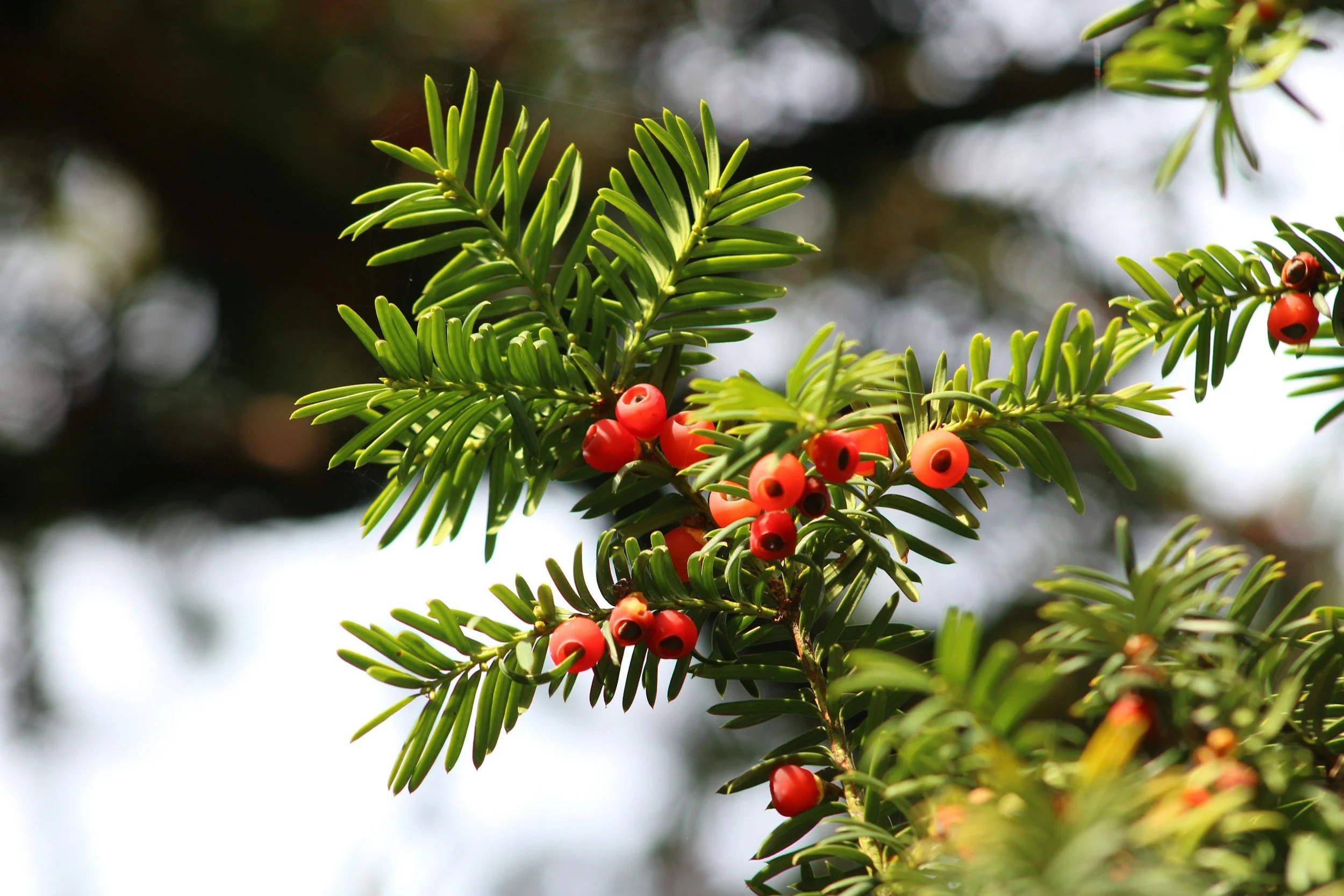
Evergreen trees appear everywhere at this time of year, in living rooms, shop windows, wreaths, and cards. Their presence can feel so familiar that we forget to ask why they matter.
Evergreens were brought indoors because they stay green when most other plants fade. In the depth of winter, they offered reassurance: life continues. Strength remains. Endurance is possible. Whether in ancient European traditions, Roman festivals, or later Christian symbolism, the evergreen became a sign of hope rooted in observation, not belief alone.
When we pause to really look at an evergreen tree in winter, we see quiet resilience. It doesn’t hurry. It doesn’t bloom out of season. It simply holds steady.
Perhaps this is part of why trees still speak to us now, reminding us that rest, patience, and survival are not weaknesses, but wisdom.
Wreaths, Circles, and Continuity
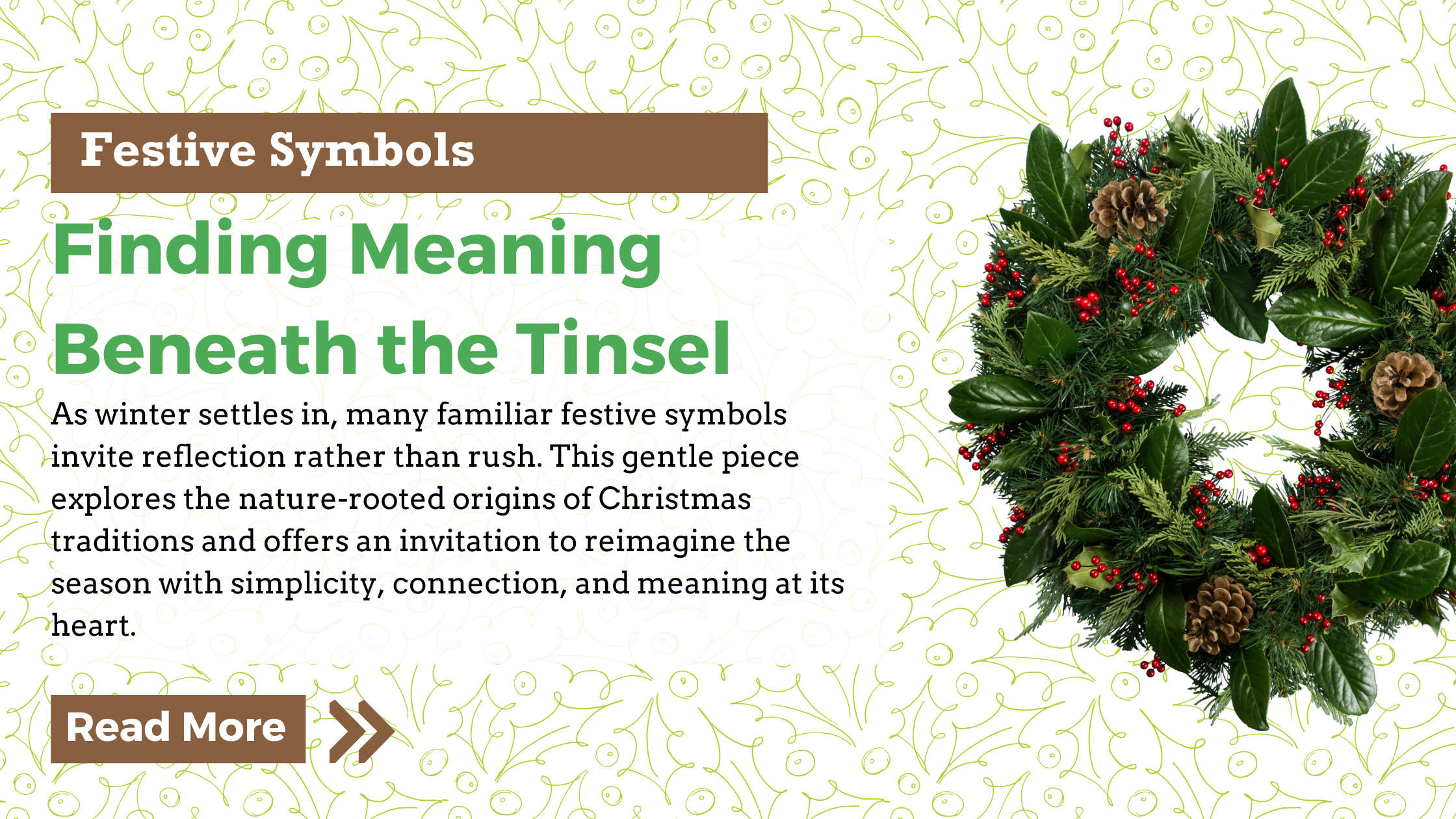
The wreath, too, carries ancient meaning. Its circular shape has no beginning or end, reflecting cycles rather than straight lines. Life moving through death, rest giving way to renewal, seasons turning again and again.
Traditionally made from local foliage, ivy, holly, pine, wreaths were never meant to be perfect. They were woven by hand, often with what was available nearby. Over time, layers of religious symbolism were added, but the deeper message remained: continuity, welcome, protection.
Placed on a door, a wreath quietly says, You are welcome here.
Placed in our awareness, it might ask, What sustains you when things feel uncertain?
Light in the Darkness
Candles, fires, fairy lights, light plays a central role in winter traditions across the world. Not to banish darkness, but to sit alongside it.
Before electricity, fire was precious. The Yule log was not decorative; it was practical, communal, and symbolic. Burned slowly over days, it represented warmth, protection, and the sun’s eventual return. Families gathered around it to share stories, food, and presence.
Today, light is everywhere, often constant and harsh. Yet many of us still crave candlelight at this time of year. Perhaps because it reminds us of something slower and more intimate. A flame asks us to pause. To gather. To notice.
In a season that can feel emotionally heavy, light becomes less about brightness and more about gentleness.
Decorations as Story, Not Status
Baubles and ornaments began as simple objects, apples, nuts, handmade shapes, hung to symbolise hope, nourishment, and future harvests. Over time, decorations became more elaborate, mass-produced, and tied to trends.
Yet many people still treasure the ornaments that carry stories: something made by hand, passed down, gifted with love, or linked to a memory. These objects matter not because of their cost, but because of their connection.
This invites a quiet question: What do we really want our traditions to hold?
Not perfection. Not abundance for its own sake. But meaning, memory, and care.
Animals, Plants, and Companionship
Winter symbols are full of living beings. Robins, reindeer, holly, ivy, mistletoe, each rooted in real relationships between humans and nature.
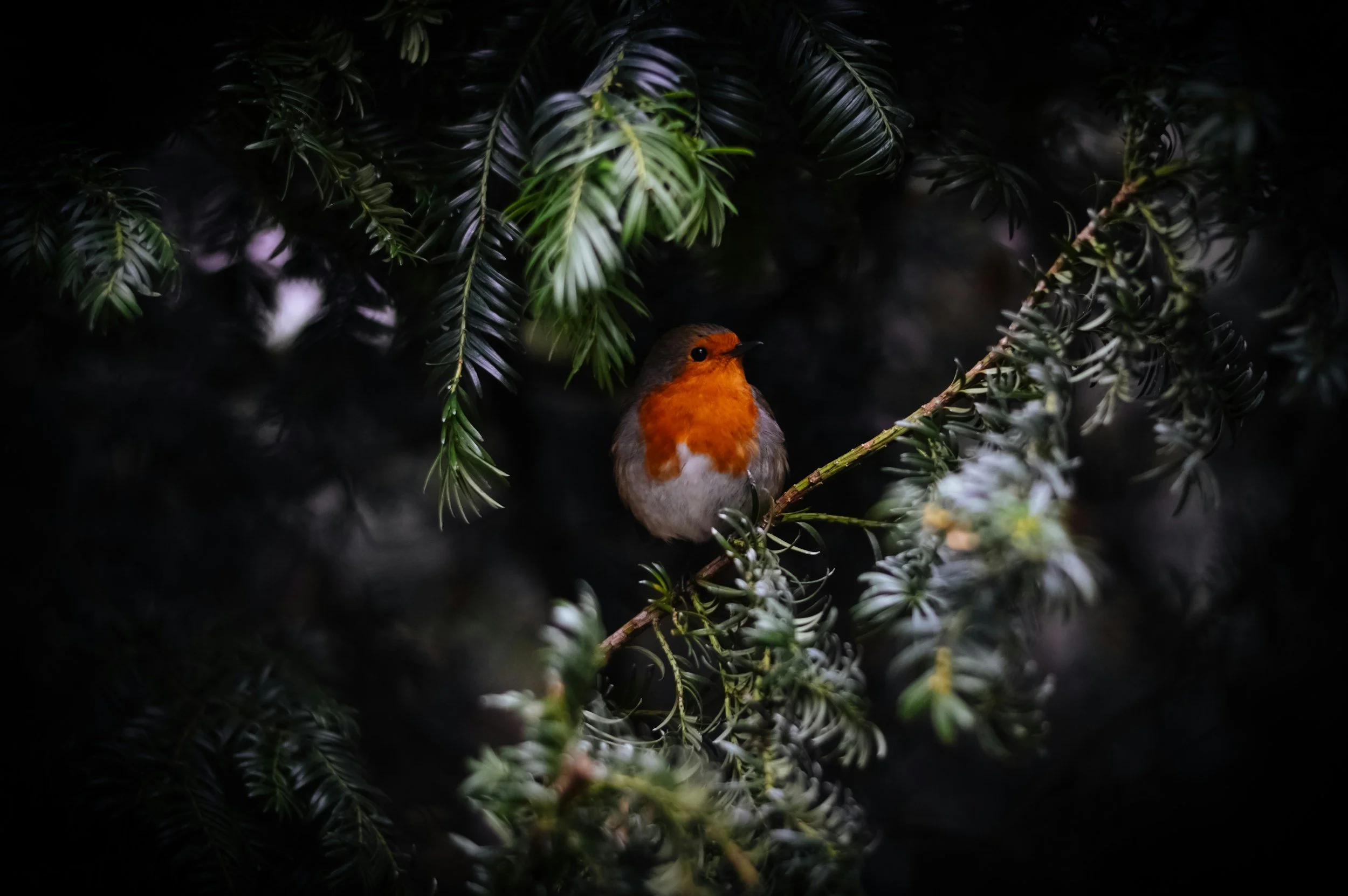
Robins appear in winter because they adapt. Their bright red breast offers comfort against bare branches, becoming a symbol of companionship and hope. Reindeer reflect survival through cooperation, endurance, and close connection to land. Holly and ivy together represent balance, strength alongside softness, protection alongside persistence.
These symbols didn’t come from fantasy. They came from watching, living alongside, and respecting the natural world.
When Meaning Becomes Lost
Over time, many of these symbols have been pulled away from their roots and reshaped by consumer culture. Traditions that once centred community, rest, and connection can now feel pressured, expensive, and emotionally draining.
This isn’t a moral failure. It’s simply what happens when systems prioritise productivity and profit over presence and care.
Reconnecting with the origins of these traditions isn’t about rejecting celebration. It’s about remembering that joy does not need excess, and meaning cannot be bought.
An Invitation to Reimagine
This season, you might gently ask yourself:
What traditions still feel nourishing?
Which ones feel inherited rather than chosen?
What might it look like to simplify, soften, or reshape them?
Perhaps it’s decorating with foraged greenery rather than buying new things. Perhaps it’s sharing food mindfully, choosing plant-based meals that feel aligned with care for the earth. Perhaps it’s stepping outside each day to notice winter’s small signs of life, moss glowing green, birdsong breaking the quiet, breath rising in cold air.
There is no right way to mark this season. Only ways that feel more connected, more honest, more alive.
When we strip back the tinsel, we often find that meaning has been there all along, waiting quietly, like winter itself, to be noticed.
